
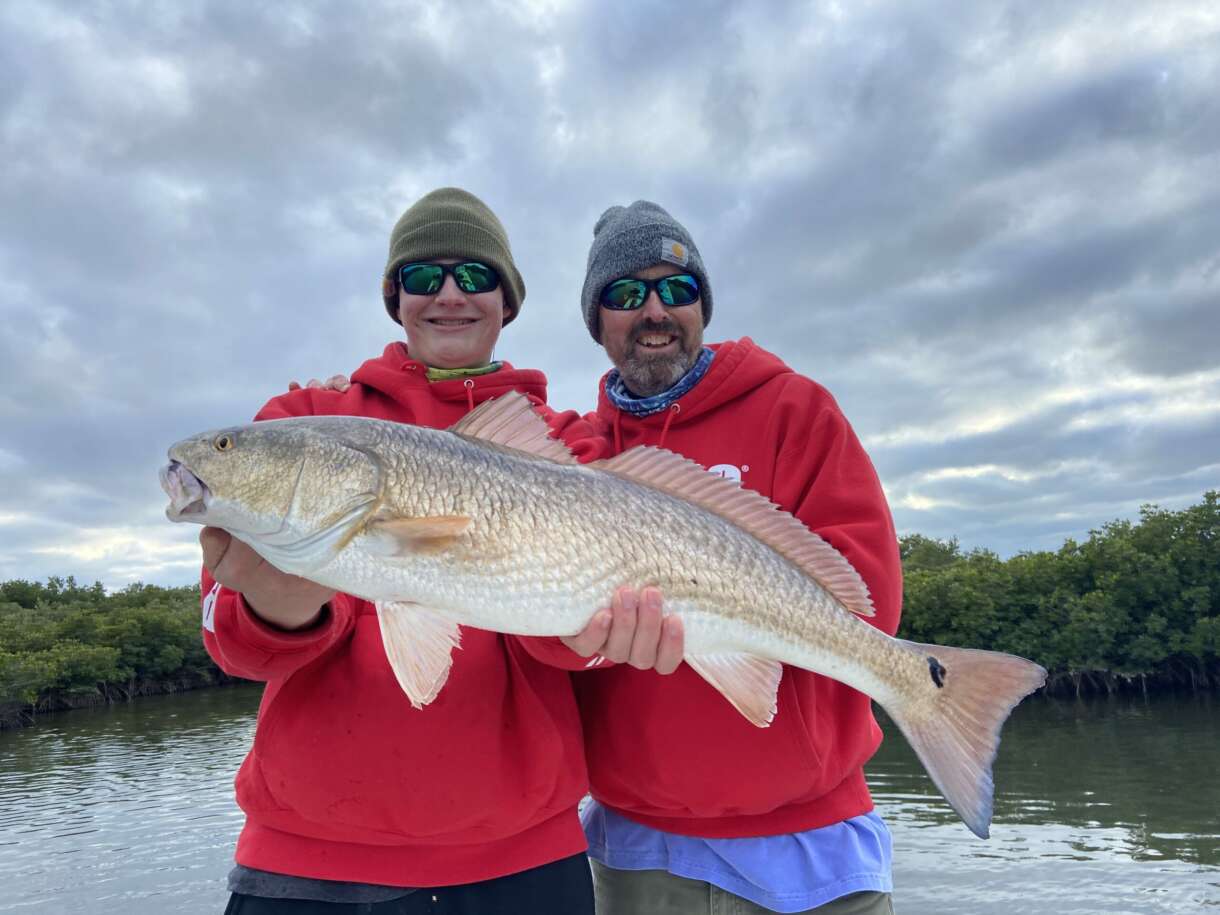
January is one of the best months to fish Crystal River if you like clear water, fewer boats, and fish that are stacked in predictable places. Winter cold fronts and big tide swings pull water off the flats, drain creeks down to their deepest bends, and concentrate bait where it has the best temperature and oxygen. The result is a very “readable” fishery that rewards anglers who pay attention to tide stage, sun angle, and wind.
If you want the week-to-week pulse before you pick dates, start with the latest Crystal River fishing reports. For the bigger seasonal breakdown that covers December through February, the full Winter Fishing This Year in Crystal River, Florida guide lays out the patterns we lean on all winter long.
What January Fishing in Crystal River Really Looks Like
January is winter fishing in its purest form on Florida’s Nature Coast. Water clarity tends to improve, grass flats get “skinnier” on low water, and the fish that tolerate cooler temperatures settle into dependable zones. On many days, you can fish multiple winter patterns in a single trip:
- Cold morning: deeper troughs, creek bends, and protected water where temperatures swing less.
- Midday warm-up: dark mud and tannin-stained edges warm first, which pulls redfish and drum shallow to feed.
- Moving water windows: incoming and outgoing tides create current seams and pinch points where trout and redfish set up.
- Negative lows: extreme low water forces fish into the remaining depth, making them easier to locate if you know how the flat drains.
- Sunny calm afternoons: the best chance at true sight casting, especially on darker bottom where fish silhouette well.
- Windy days: the “best spot” is often the calm spot, so lee shorelines and protected creeks become the whole game plan.
January also overlaps with peak manatee season in and around Kings Bay, which means sanctuaries and posted slow zones are a real part of winter navigation. A good winter trip respects the rules, runs carefully, and focuses on fishing outside protected areas where redfish, trout, drum, and sheepshead still set up in excellent numbers.
Best Fish to Target in January
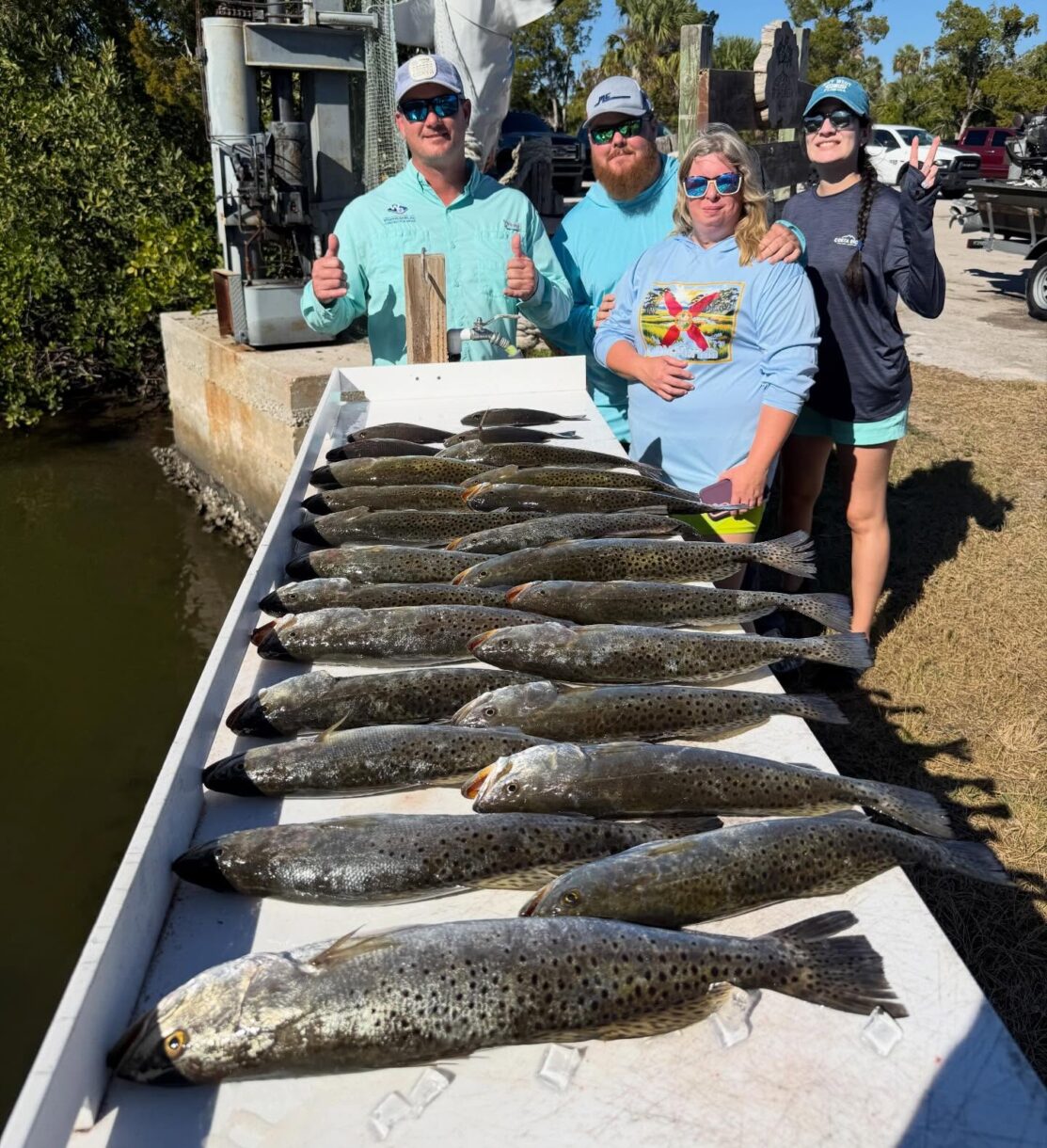
Most January trips in Crystal River revolve around a core group of winter species. You can absolutely catch bonus fish this month, but if you’re building a “high percentage” plan, these are the headliners.
| Species | Where they set up in January | Best conditions | Reliable baits and lures |
|---|---|---|---|
| Redfish | tannin creeks, oyster edges, rocky points, mud flats, shoreline pockets | sunny afternoons, warming trends after fronts, steady moving water | live shrimp, gold spoons, weedless soft plastics, light jig-and-shrimp |
| Spotted Seatrout | potholes and troughs on low tide, grass-and-sand edges, creek mouths | moderate wind or light chop, consistent drift, moving water | soft plastics on light jigheads, suspending twitch baits, shrimp under a cork |
| Sheepshead | docks, bridge pilings, limestone, nearshore rock piles when seas allow | clear water and manageable current around structure | shrimp pieces, fiddler crabs, small crustaceans on light knocker or jig rigs |
| Black Drum | deeper holes, outside creek bends, soft bottom depressions near oysters | warming mud, stable water after a front, slower presentations | shrimp, cut crab, small jigs worked close to bottom |
| Snook (often release only) | warm pockets near springs, deeper river bends, heat-holding structure | mild spells, afternoons with warmer water, minimal handling | slow paddletails, shrimp, small jerkbaits fished patiently |
| Bonus fish | edges and transition zones, mixed bottom areas, select nearshore structure | stable weather windows, clean water, low pressure days | shrimp and small jigs, small soft plastics, bottom baits |
If your January goal is bringing home fillets, sheepshead and black drum are two of the most consistent “winter table” opportunities when conditions line up. If your goal is big, visual bites, January redfish on dark mud during a warming cycle is hard to beat.
January Redfish Patterns
Redfish are the winter anchor species here, and January is when their behavior becomes very pattern-driven. After a front, the first thing to understand is that redfish do not disappear. They slide to stable water and wait for the day to warm. As soon as the sun has time to work, they move shallow to feed, often in absurdly skinny water.
In January, redfish success usually comes from fishing places that do at least one of these things well: hold heat, hold bait, or drain cleanly on low water. Dark mud bottoms warm faster than bright sand. Tannin-stained creeks hold warmth and hide fish. Oyster edges and rocky points create ambush lines.
If you like the “backcountry winter redfish” style of fishing where extreme low tides and shallow access are part of the deal, this is the month for it. Here’s a deeper look at that approach in Backcountry Red’s In Crystal River.
January Trout
Spotted seatrout in January are steady, but they want the right combination of depth, bottom, and current. On low water, the pattern is potholes and troughs. As water rises, they spread across mixed grass and sand, especially where creek mouths funnel food into open water.
The biggest adjustment most anglers need in January is speed. Winter trout will still eat artificials, but they prefer a slower, more deliberate cadence. Longer pauses on twitch baits, smaller hops on jigs, and a calmer cork rhythm often outfish nonstop movement. When in doubt, slow down again.
Sheepshead in January
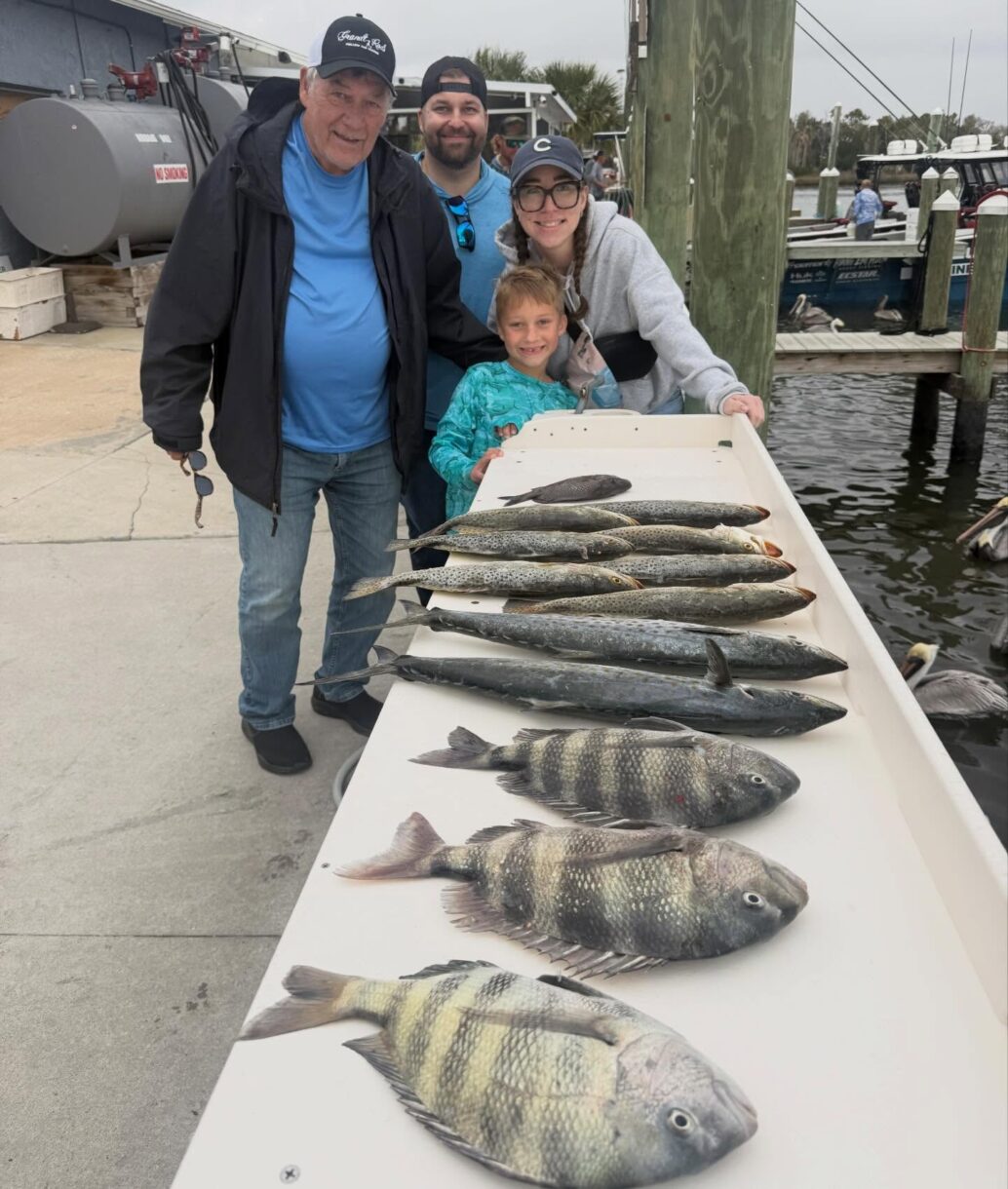
January is prime time for sheepshead around Crystal River. They are built for winter and they love hard structure. The trick is not finding structure. The trick is presenting a small bait naturally, feeling the bite, and not getting cleaned out before you ever lift the rod.
If you want a full breakdown on where they set up and what rigs work best, read Crystal River sheepshead fishing. It matches the way most successful January trips approach them: light but strong tackle, small hooks, minimal weight, and shrimp or crab baits kept tight to pilings, rocks, or ledges.
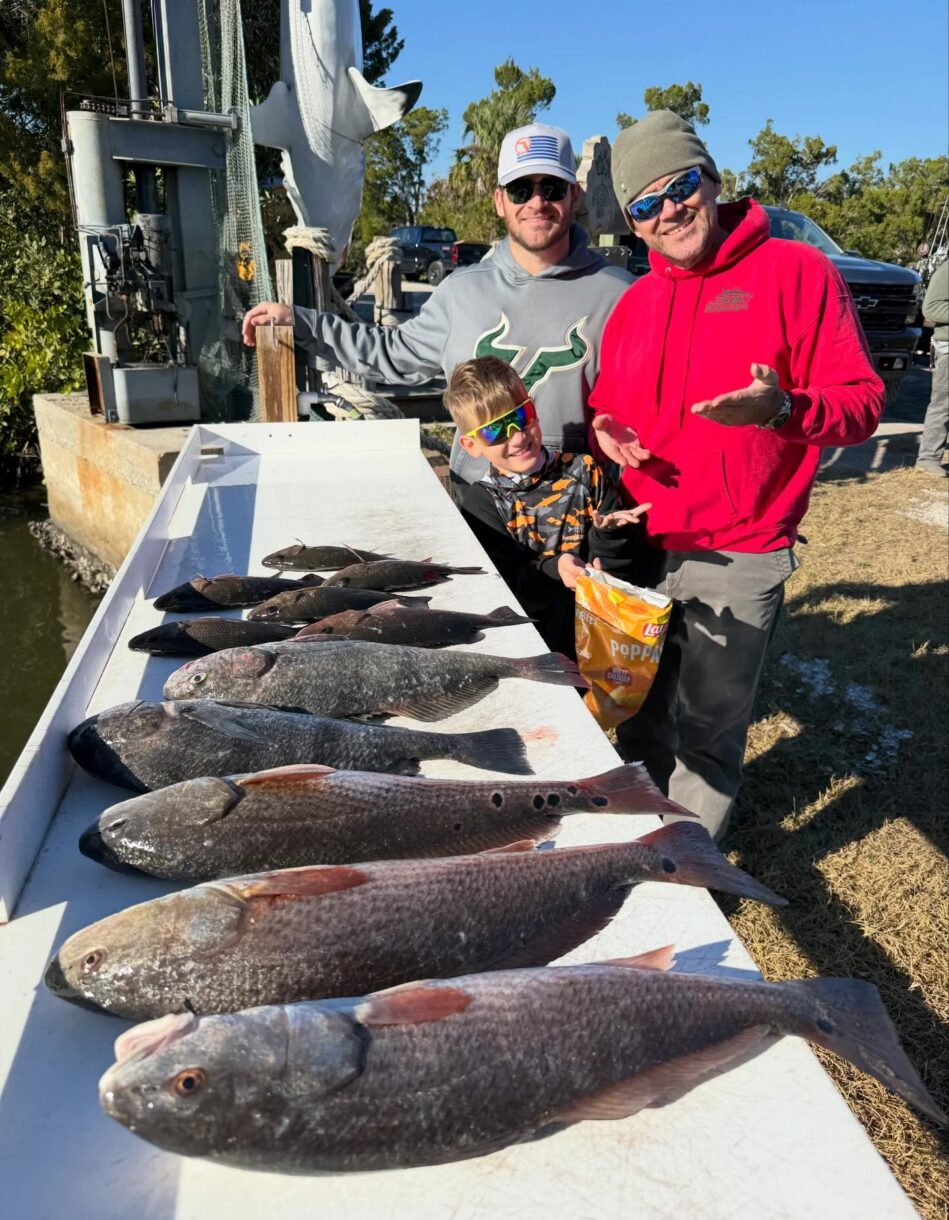
Black Drum
Black drum are a perfect January target because they share a lot of habitat with redfish, but they often sit a little deeper and a little slower. Think outside bends in creeks, deeper holes, and soft-bottom depressions where the current has scooped out extra depth. On some days you will even see them tailing next to redfish on warm mud.
Shrimp is the easy button, and cut crab can be excellent when you’re specifically trying to weed out smaller bites. Expect a “thump” bite and a strong pull. They are not always flashy, but they are consistent when the water is cold and the flats are drained.
Snook in January
Snook can show up in January, especially during mild stretches, but they are not the primary winter plan. They seek the warmest water available, which can mean spring influence, deeper river bends, and structure that holds heat in the afternoon. In many winter periods, snook are also catch-and-release only, so the right mindset is quick fights, minimal handling, and clean releases.
If snook are high on your wish list, it helps to understand how they use the Crystal River system year-round. This overview of Crystal River snook fishing explains why they can be present even when the air feels “too cold” for snook in other parts of Florida.
Tides in January
January tides are a major part of the pattern, not a minor detail. Strong north and northeast winds after cold fronts often create negative low tides that pull water off the flats. That can make some areas look fishless at first glance, but it is actually giving you a map. You get to see how each flat drains, where the bait funnels, and where the remaining depth is.
On extreme lows, the best strategy is often to start deeper than your instincts want to. Fish the troughs, bends, and holes while the morning is cold. Then, as the tide turns and the sun warms the dark bottom, slide shallower and hunt the edges where fish move up to feed.
One reason guided January trips can be so productive is timing. Many of the best winter days do not require a sunrise start. They require the right start, which often means letting the day warm a bit and fishing the tide change instead of racing it.
Where to Fish in January Without Chasing Crowds
Crystal River gives you a lot of options in a relatively tight footprint: spring-fed water, grass flats, oyster bars, and a web of creeks that all fish differently depending on tide and wind. In January, the most productive zones are usually the ones that offer protection from wind and a bottom that warms quickly.
If you’re new to the area and trying to visualize how the whole system lays out, the Areas We Fish page is a solid orientation before you start picking ramps, routes, and tide-dependent spots.
Also, keep in mind that winter boating has its own realities here. Lower water can make navigation tricky in backcountry areas, and manatee rules are in full effect. A careful, local approach makes the day smoother and usually results in more fishing time and fewer headaches.
Planning a January Charter in Crystal River
January is a great month to book an inshore fishing charter because the patterns are consistent and the species mix is strong. It’s also a month where local knowledge matters more than brute force. The “right” shoreline can be loaded while the “wrong” shoreline is lifeless simply because wind direction and sun angle changed how the water warms.
For pricing and trip lengths, the rates and reservations page lays everything out clearly. When you’re ready to lock in dates, you can use online booking or call to match the day to the best tide and weather window.
If you like to plan month-to-month, it also helps to connect the dots on either side of January. The December fishing report shows how winter patterns start setting up, and this February species rundown is a useful look at what stays strong as winter rolls on.
What to Bring for a January Fishing Trip
January in Florida can feel like three seasons in one day. The run out can be cold, the afternoon can be comfortable, and wind can change everything. Pack for the boat ride first, then you can peel layers as the sun does its job.
- layered clothing (a warm top layer for the morning run, lighter layers underneath)
- windbreaker or rain shell (wind is the real cold in January)
- polarized sunglasses (clear winter water makes sight and structure reading easier)
- hat and sunscreen (yes, even in winter)
- snacks and drinks you actually like
- closed-toe shoes with decent grip
- a small dry bag for phone, keys, and spare layers
If you’re coming on a guided trip, tackle and bait are typically covered, so your job is comfort and readiness. If you have questions about what makes sense for your group (kids, first-timers, serious anglers), the FAQ page answers most of the practical stuff people wonder about before they step on the boat.
January Fishing in Crystal River
Fish slow, fish smart, and follow the warming cycle. Start deeper on cold mornings, then slide shallow when the sun has had time to warm dark bottom. Respect manatee zones, use tides to find concentration points, and focus on the winter staples: redfish, trout, sheepshead, and black drum. Do that, and January becomes one of the most dependable months of the year to put quality fish in the boat on the Nature Coast.