May fishing in Crystal River is a late-spring inshore and nearshore fishery built around warming flats, active bait, stronger tide-driven feeding, and the arrival of serious tarpon opportunities. This guide solves May trip planning for anglers targeting tarpon, snook, redfish, spotted seatrout, and nearshore spring species. Skilled anglers can expect sight-fishing and technical casting opportunities, while newer anglers can produce steady action by fishing live bait, grass edges, mangrove shorelines, and moving water with a guide-controlled approach.
Primary May Fishing Conditions in Crystal River
May shifts Crystal River from spring transition into warm-water patterning. Fish feed earlier and later in the day, bait becomes more visible, and tide height controls access to mangrove edges, oyster bars, grass flats, and tarpon lanes. The main operating variables are water temperature, tide stage, wind, bait location, and target species.
| Variable | May Pattern | Fishing Impact | Best Adjustment |
|---|---|---|---|
| Water temperature | Warm enough for active snook, redfish, trout, and tarpon movement | Fish feed more aggressively but avoid poor oxygen and midday heat | Prioritize mornings, evenings, shade, current, and deeper escape water |
| Tide height | Higher water opens mangroves, oyster edges, and shoreline cover | Predators push shallow when bait has access to flooded structure | Fish high water tight to cover and falling water around drains and points |
| Outgoing tide | Pulls bait from creeks, mangroves, and grass flats | Snook, trout, and redfish hold on current seams and ambush lanes | Cast upcurrent and work baits naturally through the strike zone |
| Wind | Morning calm is common, afternoon wind and weather can build | Wind changes water clarity, boat control, and tarpon visibility | Use calm mornings for sight-fishing and protected shorelines when wind rises |
| Bait presence | Pinfish, mullet, shrimp, crabs, and baitfish become more active | Predators position near moving forage instead of holding in winter pockets | Fish visible bait, nervous water, slicks, rolling tarpon, and active shorelines |
The operational decision is direct: fish tarpon when the weather allows clean visibility and controlled presentations, then shift to inshore targets when wind, tide, or boat traffic reduces tarpon efficiency. This same seasonal logic fits the broader springtime species and fishing strategies in Crystal River pattern as May pushes the fishery toward warmer water behavior.
- Primary target species: tarpon, snook, redfish, spotted seatrout, mangrove snapper, and selected nearshore species when conditions allow.
- Primary habitat: grass flats, mangrove shorelines, oyster edges, spring-influenced creeks, river mouths, cuts, and nearshore rock.
- Primary baits: pinfish, finger mullet, live shrimp, pilchards, crabs, cut bait, soft plastics, spoons, and topwater plugs.
- Primary risk: forcing one target species after conditions change. May rewards flexible trip planning more than stubborn spot rotation.
May Fishing Tactics by Target and Habitat
May success comes from matching the target to the correct water type. Tarpon need visibility, room, and clean presentation angles. Snook need current and cover. Redfish need tide access to food-rich edges. Trout need grass, potholes, and moving water.
Tarpon Flats and River Mouth Presentations
May starts the serious tarpon window in Crystal River, with large fish moving across grass flats, river mouths, and travel lanes when water temperature and bait align. The highest-percentage approach follows the same principles used on dedicated Crystal River tarpon fishing charters: find moving fish, stay quiet, and present baits ahead of the line of travel.
- Target rolling or traveling fish in clear water during calm morning periods before wind and glare reduce visibility.
- Use pinfish, mullet, crabs, or large natural baits when fish are moving steadily and refusing artificials.
- Present ahead of the fish, not on top of them. Tarpon punish rushed casts with immediate refusal.
- Use heavy enough tackle to shorten the fight and protect the fish, especially in warm water.
Mangrove Snook on Moving Water
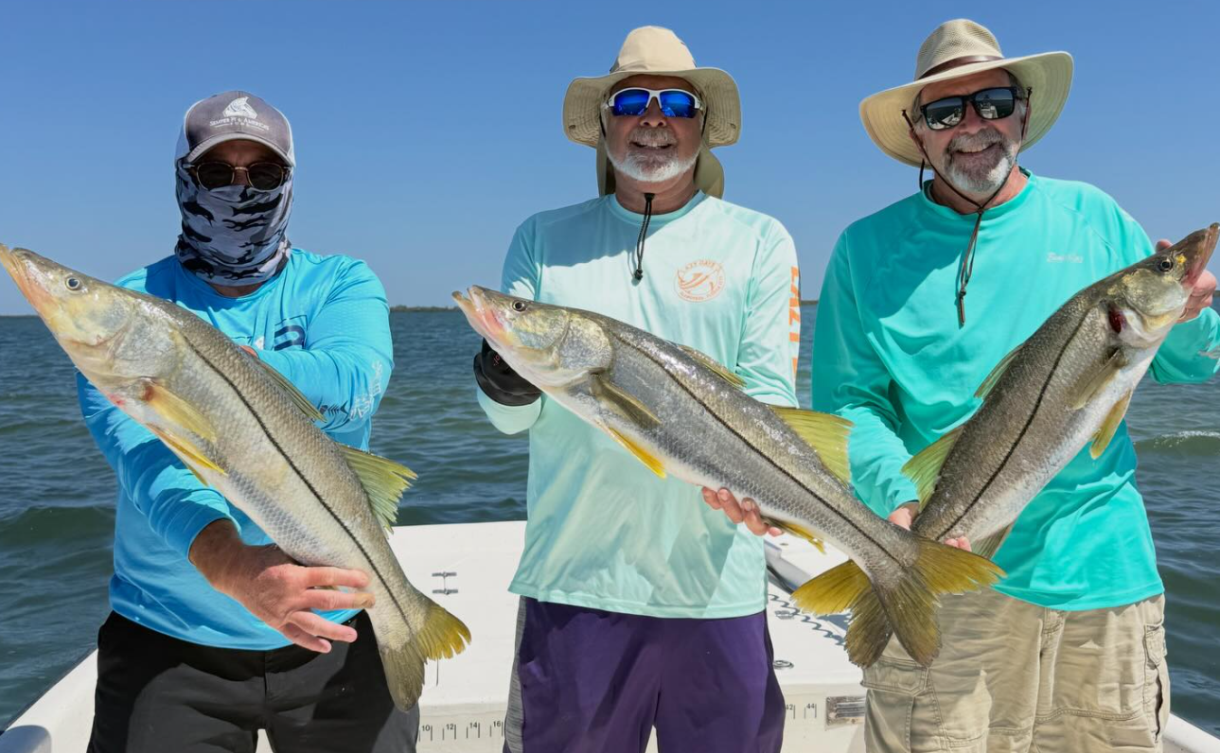
May snook fishing improves as warm water pushes fish into mangrove shorelines, creek mouths, docks, and current seams. This pattern matches the warm-season behavior described in Crystal River snook fishing, where ambush cover and tide movement control the bite.
- Fish outgoing tides where bait drains from mangrove pockets, creeks, and shoreline cuts.
- Cast live shrimp, pilchards, finger mullet, jerkbaits, or paddletails upcurrent and let them sweep naturally past cover.
- Use stronger leader around mangrove roots, limestone, docks, and oyster edges where snook can cut off light tackle.
- Prioritize early morning, evening, shade lines, and current breaks instead of exposed midday flats.
Redfish on Oyster Edges and Grass Transitions
Redfish remain consistent in May because they feed across shallow structure when tides give them access. The best water usually combines oysters, grass, mullet activity, and a nearby escape route to deeper water, which fits the same inshore framework used on Crystal River inshore fishing charters.
- Fish high water tight to mangroves, flooded oyster bars, grass edges, and shoreline points.
- Use live shrimp, cut bait, gold spoons, weedless soft plastics, or small paddletails depending on water clarity.
- On falling water, move to drains, troughs, and outside edges where bait gets pulled off the flat.
- Keep presentations quiet in clear water. Long casts and low boat noise produce more redfish in May.
Spotted Seatrout Across Grass Flats and Potholes
May trout fishing is a grass-flat pattern built around bait movement, depth changes, and drift control. The best approach expands on the local seasonal guidance in Crystal River spring inshore fishing, with trout spreading across flats but still favoring edges, potholes, and troughs.
- Target grass flats with sand potholes, especially where water depth changes from about 3 to 6 feet.
- Use soft plastics on light jigheads, shrimp under a cork, or suspending twitch baits during lower light.
- Drift until you locate fish, then repeat the productive lane instead of leaving active water too quickly.
- Speed up slightly when bait is active, but slow the retrieve if the tide weakens or water clarity gets high.
May Fishing FAQs for Crystal River
These questions determine trip timing, target selection, gear choice, and realistic expectations for May fishing around Crystal River.
Is May a good month to fish Crystal River?
May is one of the strongest fishing months in Crystal River because warm water activates snook, redfish, trout, and tarpon at the same time. The fishery offers both steady inshore action and high-skill tarpon opportunities. Morning conditions usually produce the best visibility, boat control, and feeding activity.
What is the main target species in Crystal River during May?
Tarpon become the headline target in May, but redfish, snook, and spotted seatrout remain the most consistent inshore options. The best target depends on wind, tide, water clarity, and angler skill level. Tarpon require patience and clean shots, while inshore fishing offers broader action across more conditions.
What bait works best for May fishing in Crystal River?
Live bait produces well in May because predator fish key on active forage. Pinfish, finger mullet, pilchards, shrimp, and crabs all have a role depending on the target. Artificial lures also work well, especially weedless paddletails, spoons, soft plastics, twitch baits, and topwater plugs during low-light feeding windows.
Is May better for tarpon or inshore fishing?
May can be excellent for both, but the better choice depends on conditions. Calm, clear mornings favor tarpon fishing. Wind, poor visibility, or heavy boat traffic usually make inshore fishing more productive. A flexible charter plan can start with tarpon and shift to snook, redfish, or trout when conditions change.
Plan a May Crystal River Fishing Trip
May trips should match the day’s wind, tide, water clarity, and target species to the correct section of the fishery. Crystal River Guide Service offers inshore and tarpon-focused trips designed around local tide windows, shallow-water access, bait movement, and seasonal fish behavior.
Review current Crystal River fishing reports, compare trip options on the trips and rates page, and use online booking or the contact page to plan a May fishing charter around the strongest available conditions.