July to August fishing and scalloping in Crystal River is peak summer on Florida’s Nature Coast. This is the window when warm-water fishing, shallow grass flats, bay scallops, tarpon, redfish, snook, trout, mangrove snapper, Spanish mackerel, sharks, and nearshore structure all become part of the same conversation.
For many groups, this is the most complete summer trip of the year. You can fish early while the water is cooler, then switch to scalloping once the sun gets higher and visibility improves across the grass flats. That is why the Crystal River scalloping and fishing combo charter is such a strong fit for July and August. It lets the day flex with the weather, tides, water clarity, and goals of the group.
Crystal River and Homosassa sit inside one of Florida’s most popular bay scallop zones. The current Florida Fish and Wildlife Conservation Commission scallop season for Levy, Citrus, and Hernando counties, including Crystal River and Homosassa, is listed as July 1 through September 24. Regulations can change, so always review the current FWC bay scallop regulations before harvesting.
How July and August Conditions Shape the Trip
July and August are productive, but they are not lazy months. The heat, boat traffic, afternoon storms, and changing water clarity all matter. A good summer plan is built around timing instead of brute force. Nature Coast fish and scallops are not impressed by heroic suffering. Neither are your sunburned shoulders.
| Summer Window | What Usually Matters Most | Best Trip Strategy |
|---|---|---|
| Early July | Opening scallop season, high demand, early-season grass flats, and strong summer fishing. | Book early, fish the morning bite, then scallop when sun and visibility improve. |
| Mid to Late July | Scalloping settles into a rhythm while redfish, snook, trout, snapper, and tarpon remain active. | Build the day around moving water, clean grass, and flexible inshore or combo options. |
| Early August | Scalloping remains a major draw, and inshore fishing is best during cooler, lower-traffic windows. | Start early for fish, then use scalloping or nearshore structure to extend the day. |
| Late August | Hot water, afternoon weather, and visibility changes become more important. | Prioritize early departures, shaded shorelines, deeper edges, and areas with active bait. |
| Any July or August trip | Tide, wind, sun angle, and storms can change the plan quickly. | Stay flexible. Fish when fish are set up, scallop when visibility is right, and avoid forcing yesterday’s pattern onto today’s water. |
The simple summer formula is this: fish early, watch the tide, use the sun to help spot scallops, and keep an eye on the weather. July and August reward groups that adapt. They punish groups that try to run one plan all day like a stubborn little spreadsheet with a boat motor.
- Primary fishing targets: Redfish, snook, spotted seatrout, tarpon, mangrove snapper, Spanish mackerel, sharks, jacks, ladyfish, and nearshore mixed-bag species.
- Primary scalloping habitat: Clear grass flats west of Crystal River and Homosassa, especially where visibility, safe depth, and healthy seagrass line up.
- Primary water types: Grass flats, mangrove shorelines, oyster bars, rocky points, creeks, rivers, nearshore rock piles, channels, and open scallop grounds.
- Primary planning risks: Waiting too long to book, starting too late, ignoring the tide, and pretending afternoon thunderstorms are just decorative clouds.
Scalloping in Crystal River During July and August
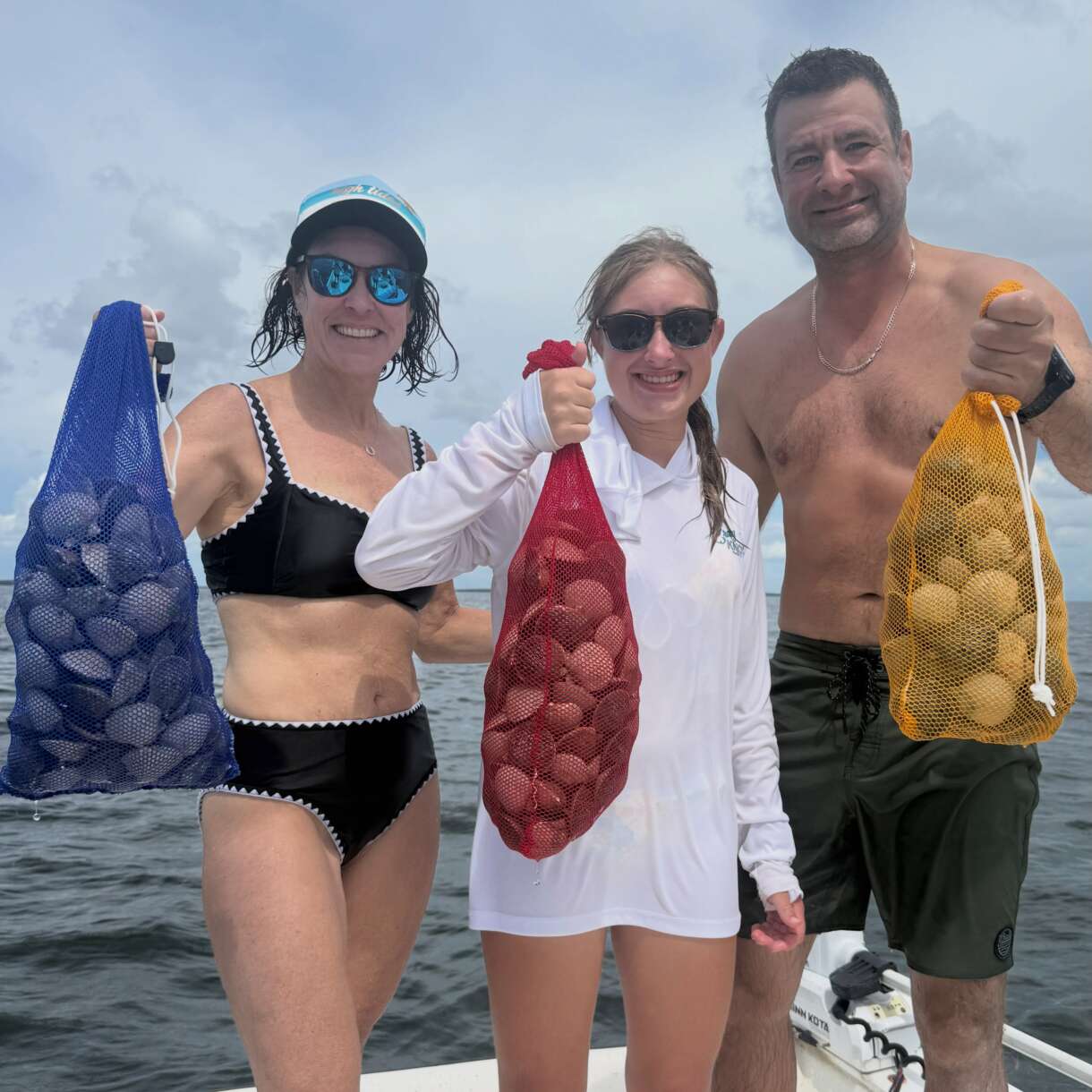
Scalloping is the summer trip that turns the Gulf into a hands-on treasure hunt. Instead of casting all day, your group snorkels over clear grass flats looking for bay scallops tucked into the grass or sitting just above it. Once you spot one, you dive down, grab it by hand, and add it to the bag.
A Crystal River scalloping charter is especially useful because finding productive, legal, clean scallop water is the whole game. The best areas can change with wind direction, tide stage, visibility, and recent boat pressure. A few yards can matter. The ocean is petty like that.
Scallops are often found in comfortable snorkeling depths across the grass flats, and Crystal River Guide Service’s scalloping page notes that productive scalloping water is commonly in the 4- to 8-foot range. That makes scalloping approachable for families, beginners, and mixed groups, as long as everyone is comfortable in the water and follows safety instructions.
What Makes a Good Scalloping Day?
Good scalloping depends on visibility. Clear water, manageable wind, bright sun, and healthy grass make scallops easier to spot. Cloudy water, chop, and heavy boat traffic make the job harder. That is why the best scalloping plan is not always the earliest possible jump in the water. Many combo trips fish first, then scallop when the sun is higher and the bottom is easier to read.
Scalloping is also a seasonal harvest, not a free-for-all. Current FWC rules list the daily bag limit for this region as 2 gallons of whole bay scallops in the shell, or 1 pint of bay scallop meat, per person. The vessel limit is 10 gallons of whole bay scallops in the shell, or 1/2 gallon of bay scallop meat. Harvest is by hand or landing/dip net only, and there is no minimum size limit. Always confirm the latest rules before your trip.
FWC also asks scallopers not to discard scallop shells in inshore waters commonly used for recreation, including the Crystal River and Homosassa River. Shells should be placed in a trash receptacle or discarded only where they can disperse safely in larger bodies of water.
Scalloping Safety
Whenever snorkelers or divers are in the water, diver-down flag rules matter. Boaters near a divers-down flag must operate carefully and follow Florida’s distance and idle-speed requirements. Scallopers should stay close to the boat or flag and listen to the captain’s instructions before entering the water. Review the FWC diver-down flag guidance before running your own boat or joining friends on a private scalloping trip.
Fishing Before or After Scalloping
The best July and August fishing often happens before the day gets fully hot. Early morning gives anglers cooler conditions, less boat traffic, and a better chance of finding fish feeding around moving water. That is why summer fishing pairs so well with scalloping. You can target fish while they are most active, then switch to scalloping when the sun helps visibility.
Groups that want a fishing-focused trip should start with a Crystal River inshore fishing charter. These trips work the grass flats, mangrove shorelines, oyster bars, creeks, rivers, rocky edges, and nearshore areas that hold summer fish.
Groups that want the full seasonal experience should look closely at the scalloping and fishing combo trip. That format is built for summer variety: part of the day harvesting scallops, part of the day targeting fish like redfish, seatrout, snook, mangrove snapper, Spanish mackerel, and other inshore or nearshore species.
Five Productive July to August Fishing Patterns
Redfish Around Mangroves, Oyster Bars, and Rocky Edges
Redfish remain one of the most dependable summer targets around Crystal River. During July and August, they use mangrove edges, oyster bars, rocky points, grass pockets, creek mouths, and tide-driven ambush lanes. Higher water can let fish push tight to cover, while falling water often pulls them toward drains, troughs, potholes, and edges.
Accurate casts and quiet boat positioning matter. Live bait, cut bait, shrimp, weedless soft plastics, spoons, and paddletails can all produce when matched to the water depth and cover. The key is placing the bait where the fish naturally expect food to arrive with the current.
For more seasonal detail, read Crystal River Guide Service’s guide to summer redfish and snook fishing in Crystal River.
Snook in Shade, Current, and Warm-Water Ambush Spots
Snook are active in summer, but they still prefer efficiency. They feed best where bait is pushed by current, where shade gives them cover, or where structure lets them ambush without wasting energy. Look for mangrove points, creek mouths, seawalls, river edges, rocky structure, and current seams.
Early morning is usually the friendliest window. As the sun gets higher, snook often slide tighter to cover or deeper into current breaks. Live bait is hard to beat, but soft plastics, topwater plugs, twitch baits, and small swimbaits can all work when fish are feeding.
Snook regulations are seasonal and can change, so check current harvest rules before keeping any fish. When in doubt, handle snook carefully and release them quickly, especially during hot-water months.
Spotted Seatrout Over Grass Flats and Potholes
Spotted seatrout give summer anglers steady action when the plan matches the temperature. The early bite over grass flats can be excellent, especially around potholes, bait schools, and edges where current moves across the flat. Once the sun climbs, trout may spread out, move deeper, or become more selective.
Popping corks with live shrimp, small paddletails, twitch baits, and jigs are all useful July and August trout tools. The best approach is often a controlled drift across productive grass, then a reset once the boat passes the bite zone.
Trout fishing also fits well with families and mixed-skill groups because the technique is simple, the action can be steady, and a variety of other species often join the party.
Tarpon on Calm Summer Mornings
July remains an important tarpon month in Crystal River and Homosassa. The Nature Coast tarpon fishery is different from many Florida beach-and-pass fisheries because fish may roam shallow grass flats, rivers, creeks, and open lanes. That creates exciting sight-fishing opportunities when conditions line up.
Tarpon are not a numbers game. They require patience, good boat positioning, clean presentations, and calm decision-making when a fish finally eats. This is the trip for anglers who want the chance at a powerful, technical, bucket-list fish rather than constant bites.
Anglers focused on the Silver King should review Captain Casey’s Crystal River tarpon fishing charter page before booking.
Mangrove Snapper, Spanish Mackerel, Sharks, and Nearshore Structure
July and August are not limited to grass flats. Nearshore rock piles, channel edges, markers, and hard bottom can hold mangrove snapper, Spanish mackerel, sharks, grunts, jacks, and other summer species. These areas are especially useful when the flats get hot or when a group wants steady action after scalloping.
Mangrove snapper are quick, sharp, and much stronger than their size suggests. Small live baits, shrimp, and cut bait presented close to structure can produce fast bites. Spanish mackerel respond well to moving bait, small jigs, spoons, and active bait schools. Sharks can provide exciting rod-bending action for families and groups that want a bigger pull without chasing technical tarpon.
Crystal River also has a unique shallow-water grouper fishery, though grouper harvest seasons and rules must always be checked before keeping fish. Anglers interested in that style of structure fishing can learn more about shallow-water grouper fishing in Crystal River.
July Versus August: Which Month Should You Pick?
Why Book in July?
July is the opening month for scalloping in Crystal River and Homosassa, so demand is high and the energy around the season is strong. Early July often brings that first-wave excitement: clear grass, new scallop opportunities, warm-water fishing, and a lot of families planning their annual Nature Coast trip.
July can also be a better month for anglers who want to keep tarpon as a serious option. The fish are still very much part of the summer conversation, especially during calm mornings with good water and active bait.
For a deeper look at the opening stretch of the season, read July Brings the First Wave of Scallops to Crystal River.
Why Book in August?
August is full summer. Scalloping remains a major draw, redfish and snook stay active around the right tides, and trout, snapper, mackerel, sharks, and mixed-bag species help keep rods bent. August can be an excellent month for groups that want both harvesting and fishing without focusing only on tarpon.
The tradeoff is heat. August rewards early starts and flexible plans. Fish first, scallop when visibility improves, then stay alert for weather. Afternoon storms can build quickly, and water clarity can change with wind and tide.
For more on the late-summer transition, see Crystal River Guide Service’s article on August redfish and scalloping in Crystal River.
Should You Book Scalloping Only, Fishing Only, or a Combo Trip?
Scalloping Only
A scalloping-only trip is the best choice when the main goal is getting in the water, collecting bay scallops, and enjoying a relaxed summer adventure. It is a strong fit for families, visitors, first-timers, swimmers, and groups that want a hands-on Nature Coast experience.
Regular scalloping trips focus on the grass flats and the harvest. Guests should bring sun protection, drinks, snacks, towels, and any personal items they need for a few hours on the water. If you prefer your own mask, snorkel, or fins, bring them along or confirm gear details while booking.
Fishing Only
A fishing-only trip is the better choice for anglers who want to spend the full charter casting, targeting specific species, or working multiple habitats. In July and August, this usually means starting early and building around moving water, shade, bait, and structure.
Fishing-only trips are also the right format for serious tarpon anglers, redfish-focused anglers, and groups that prefer staying dry while chasing bites.
Scalloping and Fishing Combo
The combo trip is the best summer sampler. It gives your group a chance to harvest scallops and still target fish in the same outing. That variety is exactly why July and August are so popular. One part snorkeling trip, one part fishing charter, one part seafood mission. The ancient trilogy, but wetter.
Crystal River Guide Service’s combo charter is designed for groups that do not want to choose between activities. It is especially useful when families or mixed groups have different interests. Some guests may care most about scallops, while others want redfish, trout, snook, snapper, or mackerel. The combo format gives everyone a lane.
July to August Fishing and Scalloping FAQs
Is July a good month for scalloping in Crystal River?
Yes. July is the opening month for the Crystal River and Homosassa scallop season under the current FWC season listing. It is one of the most popular times to book because the season is fresh, families are traveling, and scalloping pairs well with early morning fishing.
Is August too late for scalloping?
No. August is still well inside the listed Crystal River and Homosassa scallop season. Conditions can be hotter, and visibility can change with weather, but August remains one of the main summer months for scalloping on the Nature Coast.
Can you fish and scallop on the same trip?
Yes. The Crystal River scalloping and fishing combo charter is built for exactly that. A common summer plan is to fish early while conditions are cooler, then scallop once the sun is higher and visibility improves over the grass flats.
What fish are biting in July and August?
Common summer targets include redfish, snook, spotted seatrout, tarpon, mangrove snapper, Spanish mackerel, sharks, jacks, ladyfish, and nearshore mixed-bag species. The exact plan depends on tide, wind, water clarity, bait, guest experience, and whether the trip includes scalloping.
Is scalloping good for kids and beginners?
Yes, scalloping can be an excellent family activity when children are comfortable in the water and conditions are safe. It is hands-on, visual, and easy to understand. Beginners should listen carefully to the captain’s safety instructions, stay near the boat, and avoid pushing beyond their swimming ability.
Do scallopers need a fishing license?
Most recreational scallop harvesters need a Florida saltwater fishing license unless they qualify for an exemption. Guided charter trips may include licensing coverage, but guests should confirm trip details when booking and review the current FWC rules before harvesting.
What should guests bring on a July or August trip?
Bring sun-protective clothing, sunscreen, polarized sunglasses, a hat, towel, drinks, snacks, water shoes or deck-friendly footwear, and any personal medication. For scalloping, bring swimwear and anything personal you prefer for comfort in the water. Confirm current gear details when booking, especially if your group has specific mask, snorkel, or fin needs.
What time of day is best?
For fishing, early morning is usually best. For scalloping, bright sun and calm water can help visibility, so late morning can be productive once the light is high enough to see into the grass. Combo trips work well because they can use both windows.
Where do Crystal River summer trips fish and scallop?
Trips may fish Crystal River, Homosassa, surrounding Nature Coast flats, mangrove shorelines, creeks, rivers, oyster bars, rocky edges, and nearshore structure depending on the day. Learn more about the region on the areas we fish around Crystal River and Homosassa page.
How far ahead should you book?
July and August are busy because scallop season is short and summer travel demand is high. Booking early gives your group a better chance at preferred dates, tides, and trip times.
Plan a July or August Fishing and Scalloping Trip With Crystal River Guide Service
July and August give Crystal River visitors the full Nature Coast summer experience. You can chase redfish and snook around mangroves, drift grass for trout, look for tarpon on calm mornings, work structure for snapper and mackerel, or jump in and harvest bay scallops by hand.
The best trip depends on your group. Anglers who want to cast all morning should choose a fishing charter. Families and swimmers who want the classic summer harvest should book scalloping. Groups that want the most variety should choose a scalloping and fishing combo.
Before choosing a date, browse the latest Crystal River fishing reports for current seasonal updates from the water.
Ready to plan your July or August trip? Book your Crystal River fishing or scalloping trip online, call 352-322-6660, or contact Captain Casey with questions about tides, scalloping conditions, trip options, and availability.