August through September fishing in Crystal River is one of the most interesting seasonal handoffs on the Nature Coast. August still feels like full summer, with scalloping, warm-water inshore fishing, mangrove snapper, sharks, trout, redfish, snook, and early-morning action around grass flats, mangroves, creeks, oyster bars, and rocky edges. September begins the fall transition, bringing stronger attention to redfish, shallow-water gag grouper, cleaner feeding windows, and the final stretch of scallop season.
For many groups, this is the best time to build a trip with options. You can book a Crystal River inshore fishing charter, spend the day on a Crystal River scalloping charter, split the day with a scalloping and fishing combo charter, or plan around September shallow water grouper fishing when regulations, weather, and Gulf conditions line up.
The key is flexibility. August and September can both fish extremely well, but they are not the same month wearing different sunglasses. August rewards early starts, shade, moving water, and scallop-friendly visibility. September starts shifting toward more fall-style fishing, with redfish becoming a bigger focus and gag grouper moving to the front of many anglers’ minds.
August Through September Fishing Snapshot
Late summer fishing in Crystal River is all about matching the day’s plan to the conditions. Heat, tides, water clarity, bait movement, scallop visibility, storms, and legal harvest windows all matter. The fishery gives us plenty to work with, but the calendar is not a magic wand. Tiny rule changes and weather shifts can move the whole chessboard.
| Season Window | Best Opportunities | Trip Planning Notes |
|---|---|---|
| Early August | Scalloping, redfish, trout, snook, mangrove snapper, sharks, Spanish mackerel, and mixed-bag inshore action. | Fish early while temperatures are lower, then scallop once the sun is higher and visibility improves. |
| Late August | Redfish around mangroves and oyster bars, trout over grass, snapper on structure, shark trips, and strong scalloping days. | Morning trips are usually the best bet because heat and afternoon thunderstorms remain major planning factors. |
| Early September | Scalloping, redfish, trout, snook, mangrove snapper, sharks, and shallow-water gag grouper during open harvest windows. | This is one of the most useful crossover windows because scalloping and fall fishing patterns can overlap. |
| Mid to late September | Redfish, trout, snook, mangrove snapper, grouper, Spanish mackerel, and mixed-bag inshore fishing. | Scallop season winds down, weather begins shifting, and fishing becomes more focused on the fall transition. |
Why August Is Still a Prime Summer Month
August fishing in Crystal River is warm, active, and highly condition-driven. The best bite usually happens early, especially around moving water. Redfish may push along mangrove shorelines, rocky edges, oyster bars, potholes, creek mouths, and drains. Trout often feed over grass flats before sliding deeper as the sun rises. Snook hold around current, shade, spring-influenced water, and tight structure. Mangrove snapper become a major player around rocks, channel edges, docks, and nearshore structure.
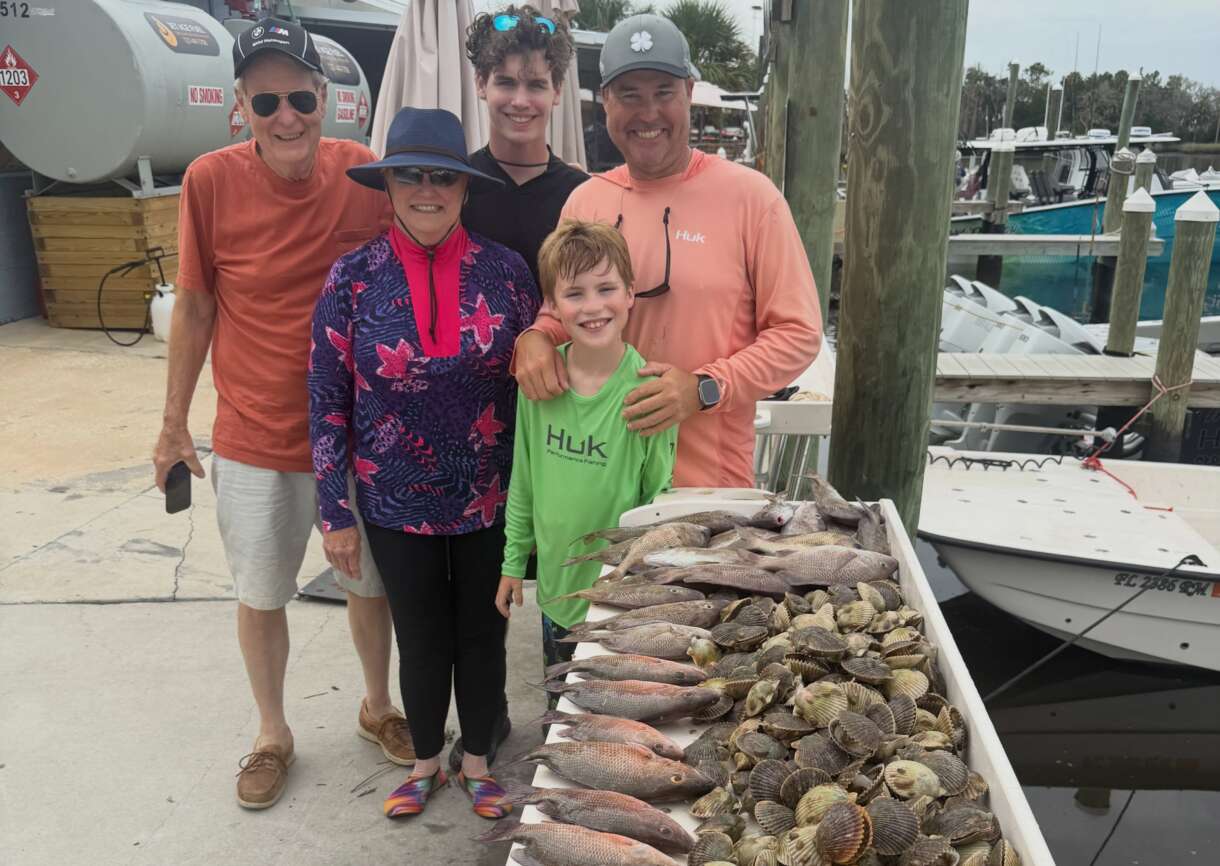
August is also one of the strongest months for scalloping. The Gulf grass flats are warm, clear on the right days, and active with families, visitors, and returning scallopers. On a dedicated scalloping trip, we work out of the Crystal River and onto the grass flats, where guests use fins, masks, snorkels, and bags to collect bay scallops by hand.
For groups that want the most variety, August is hard to beat. A combo trip lets us fish during the cooler morning window and then switch to scalloping when the sun gets higher. That rhythm makes sense for families, mixed-skill groups, and anyone who wants a day that is more than just casting.
Why September Is the Start of the Fall Shift
September changes the feel of the fishery. It can still be hot, humid, and stormy, especially early in the month, but the fishing begins leaning toward fall. Redfish become a bigger focus, bait movement gets more important, and shallow-water grouper season turns September into a high-interest month for anglers who want structure fishing and hard-pulling fish.
September also gives scallopers a final opportunity before the local season closes. In Crystal River and Homosassa, the 2026 bay scallop season runs July 1 through September 24. That makes early and mid-September a useful window for guests who want to combine scalloping with inshore fishing before the season ends.
As the month moves forward, we usually pay closer attention to redfish, trout, snook, mangrove snapper, Spanish mackerel, sharks, and grouper opportunities. This is the time of year when a smart plan can shift from grass flats to oyster bars, from mangroves to rock piles, or from scalloping to fishing based on weather and water clarity.
Scalloping Through Late September
Scalloping is one of Crystal River’s signature summer experiences. Instead of waiting on a bite, guests get in the water and hunt for scallops across shallow grass flats. It is active, family-friendly, and easy to understand: spot the scallop, dive down, grab it by hand, and place it in the bag.
For 2026, Crystal River and Homosassa are part of the Levy, Citrus, and Hernando county scalloping zone, with an open season from July 1 through September 24. The current daily limit for this zone is 2 gallons of whole bay scallops in shell or 1 pint of scallop meat per person, with a vessel limit of 10 gallons whole or 1/2 gallon of meat. Scallops may be harvested by hand or with a landing or dip net. Always review the current Florida bay scallop regulations before your trip.
September scalloping can be very good when visibility cooperates. Calm wind, clean water, and sunlight make it easier to spot scallops in the grass. Wind, storms, and churned-up water can make the search tougher. That is why local guidance matters. Pretty water and productive water are sometimes the same thing, but not always. The ocean enjoys keeping a few secrets in its soggy little pockets.
Fishing and Scalloping Combo Trips
The Crystal River scalloping and fishing combo charter is built for late summer. We scallop for part of the trip and fish for the other part, which gives groups a better chance of matching the day to the conditions.
A common August or early September plan is to fish first, while temperatures are lower and fish are more willing to feed. Then, once the sun is higher and scallop visibility improves, we move into the scalloping portion of the trip. This setup works especially well for families, kids, mixed groups, and visitors who want a true Nature Coast day instead of choosing only one activity.
During the fishing portion, we can target redfish, seatrout, snook, mangrove snapper, sheepshead, Spanish mackerel, and other seasonal species around grass flats, mangroves, oyster bars, channels, and nearshore rock piles.
Redfish Around Mangroves, Oyster Bars, and Rocky Edges
Redfish are one of the main targets from August into September. Higher tides can push them tight to mangrove shorelines, rocky banks, and flooded edges. Falling water can pull them toward oyster points, potholes, sandy cuts, creek mouths, and drains where bait gets funneled off the flats.
Quiet boat positioning matters. Redfish may feed aggressively, but they are still shallow-water fish with suspicious little brains. A noisy approach can move them before the first cast ever lands. Live shrimp, cut bait, pinfish, spoons, paddletails, and other soft plastics can all work when the presentation matches the water.
September often makes redfish even more important because the first hints of the fall pattern begin showing up. Schools may become more noticeable, baitfish movement becomes easier to read, and certain shorelines or edges can reload with fish as tides change.
Redfish harvest regulations are managed by region. Crystal River falls within Florida’s Big Bend redfish management region, where current FWC rules list redfish as open year-round with an 18- to 27-inch slot and a daily limit of 1 fish per person, with a 4-fish vessel limit. Regulations can change, so check the current Florida redfish regulations before keeping fish.
Spotted Seatrout on Grass Flats and Potholes
Spotted seatrout are a dependable late-summer and early-fall target when the plan fits the water temperature. Early in the day, trout may feed across grass flats, pothole chains, sandy breaks, and channel edges. Once the sun climbs, deeper grass and moving water become more important.
Live shrimp under a popping cork is a reliable choice for families and newer anglers. Soft plastics, twitch baits, and small jigs are useful for covering water and finding active fish. The best approach is usually a controlled drift across productive grass, followed by a careful reset upcurrent once the bite zone is located.
In the Big Bend region, current FWC rules list spotted seatrout as open year-round with a 15- to 19-inch slot, 5 fish per person per day, and one fish over 19 inches allowed per vessel or shore angler as part of the bag limit. Always review the current Florida spotted seatrout regulations before harvesting trout.
Snook in Late Summer and Early Fall
Snook are part of the Crystal River fishery, especially around spring-fed water, mangrove edges, creeks, current seams, deeper shoreline cuts, and structure. August snook fishing should be treated as catch-and-release because the Big Bend snook harvest season is closed through August 31 under current FWC rules.
September can bring a legal harvest window, but snook rules are regional and should be checked carefully before keeping a fish. The current Big Bend rules list snook harvest closed December through the end of February and May 1 through August 31, with a 28- to 33-inch slot and a 1-fish daily bag limit when harvest is open. A snook permit is required in addition to a recreational fishing license when harvesting snook.
For fishing purposes, snook are usually best approached with accuracy and patience. Cast tight to cover, work moving water, and be ready when the fish eats. A snook does not politely ask for permission to wrap you in mangroves. It simply does the paperwork itself.
Before targeting or keeping snook, review the current Florida snook regulations.
Mangrove Snapper, Spanish Mackerel, and Nearshore Structure
Late summer is a strong time for mangrove snapper around rocks, ledges, channel edges, docks, markers, and nearshore structure. These fish are aggressive, fast, and much stronger than their size suggests. Small live baits, shrimp, and cut bait presented close to structure can produce steady action.
Mangrove snapper are also a great option when the flats slow down in the heat. They allow us to keep rods bent while still fishing productive water. In state waters, current FWC rules list gray, or mangrove, snapper as open year-round with a 10-inch minimum size and 5 fish per person within the 10-snapper aggregate. Federal rules differ, so check the current Florida snapper regulations before keeping snapper.
Spanish mackerel, jacks, ladyfish, bluefish, grunts, and other mixed-bag species can also show up around bait schools, channel edges, rock piles, and moving water. These fish are useful for family trips because they can provide steady action while we wait for higher-percentage windows for redfish, trout, or grouper.
Shark Fishing in August and September
Warm water keeps sharks active through August and September. A Crystal River shark fishing charter is a good option for anglers who want a bigger pull without making the entire day revolve around one technical target.
Shark fishing is exciting, but handling and identification matter. Many shark species are prohibited from harvest, possession, or landing in Florida waters. Prohibited species must remain in the water with their gills submerged and should be released without delay. Unknown shark species should be treated as prohibited and released. Review the current Florida shark regulations before planning a shark-focused trip.
September Shallow-Water Gag Grouper
Crystal River’s shallow-water grouper fishery is one of the most unique parts of fishing the Nature Coast. Gag grouper can be targeted around hard bottom, rocks, ledges, structure, and nearshore zones that are much shallower than many visitors expect. That gives anglers a chance at powerful fish without always needing long offshore runs.
For 2026, current FWC rules list Gulf gag grouper harvest open September 1 through September 30 in Gulf state waters, with a 24-inch minimum size, 2 fish per person within the 4-grouper aggregate, and a 0-fish bag limit for charter captain and crew. NOAA Fisheries lists the 2026 Gulf federal recreational gag season as opening September 1 and closing at 12:01 a.m. local time on October 1. Review the current Florida grouper regulations and the 2026 NOAA Gulf gag grouper announcement before keeping grouper.
Shallow-water gag grouper fishing is not delicate. These fish hit hard, dig for structure, and punish loose drag or slow reactions. Trolling diving plugs, fishing live bait, and working structure with the right tackle can all be productive depending on depth, water clarity, current, and bottom type.
September is also a month when weather matters. Calm Gulf conditions can open up good grouper opportunities. Wind, storms, or rough water may make inshore fishing the better plan. That is why having multiple targets available is such an advantage this time of year.
Tarpon and Late-Season Big Fish Opportunities
August and September are not always peak tarpon months, but tarpon can still be part of the conversation when conditions line up. Crystal River and Homosassa tarpon are different from many beach-and-pass fisheries because these fish can roam shallow grass flats, creeks, rivers, and open lanes.
A Crystal River tarpon fishing charter is best for anglers who want a technical, patient, big-fish experience. Late-season tarpon are not usually a numbers game. They require clean boat positioning, good presentations, and calm decision-making when a fish finally eats.
Tarpon are managed as a catch-and-release fishery in Florida. Large tarpon must remain in the water unless an angler is pursuing an eligible record with the proper tag. Review the current Florida tarpon regulations before targeting tarpon.
Choosing the Right August or September Charter
The best trip depends on your group, the weather, the tide, and what you want out of the day. Some groups want steady action. Some want scallops. Some want a big fish. Some want dinner if regulations allow. Some just want the kids to have fun and not declare war on the boat snacks by 9:15 a.m.
| Trip Goal | Best Charter Option | Why It Works |
|---|---|---|
| Steady fishing action | Inshore fishing charter | Targets redfish, trout, snook, mangrove snapper, mackerel, jacks, ladyfish, and mixed-bag species in protected water. |
| Family summer trip | Scalloping charter | Hands-on, easy to understand, and great for kids, families, friends, and first-time visitors. |
| Fishing plus scalloping | Scalloping and fishing combo charter | Lets the day flex between early fishing and later scalloping when visibility improves. |
| Hard-pulling structure fish | Shallow water grouper charter | September can offer a key gag grouper harvest window when regulations and conditions allow. |
| Big-fish excitement | Shark fishing charter | Warm water keeps sharks active and creates a strong option for anglers looking for a bigger fight. |
| Area exploration | Nature Coast fishing trip | Crystal River’s springs, estuaries, grass flats, mangroves, oyster bars, rivers, creeks, and rock structure create many ways to fish. |
Weather, Tides, and Late-Summer Timing
August through early September is still part of peak rainy season in West Central Florida. Afternoon storms, lightning, heavy rain, changing wind, and tropical weather can all affect the plan. The National Weather Service notes that July through early September is typically the peak of the rainy season, while mid-September through early October begins the wind-down phase with higher variability from tropical systems and early fall fronts.
That is why morning trips are often the best fit. The air is cooler, boat traffic is usually lighter, and storms are less likely to disrupt the first part of the day. Strong tide movement can extend the bite, but heat and weather still matter.
Scalloping benefits from calm wind, good sunlight, and clear water. Fishing benefits from current, bait, structure, and lower-light feeding windows. The best late-summer plan balances both instead of pretending the fish read our schedule. They do not. Very inconsiderate little water goblins.
For general weather context, review the National Weather Service overview of Florida thunderstorm season.
What to Bring on an August or September Charter
We provide the core fishing gear, licenses, and permits for anglers on board. On scalloping trips, masks, fins, snorkels, and scallop bags are provided. Guests should still bring personal comfort items for a warm late-summer day on the water.
- Polarized sunglasses: Helpful for seeing bait, bottom changes, glare lines, fish movement, and scallop water.
- Weather-appropriate clothing: Lightweight sun-protective clothing is useful in August and September.
- Sunscreen: Apply before the trip and bring extra. Lotion sunscreen is usually better on the boat than spray sunscreen.
- Snacks and drinks: Hydration matters during late-summer fishing and scalloping.
- Towel and dry clothes: Especially useful for scalloping and combo trips.
- Rain jacket: Summer showers can move through quickly.
- Personal medication: Bring anything you may need while away from the dock.
For more general trip questions, visit our Crystal River fishing charter FAQ.
August Through September Fishing FAQs
Is August a good month to fish Crystal River?
Yes. August is a strong month for scalloping, redfish, trout, snook, mangrove snapper, sharks, Spanish mackerel, and mixed-bag inshore action. The best fishing usually happens early, around moving water, bait, shade, structure, and grass flats with the right conditions.
Is September a good month to fish Crystal River?
Yes. September is one of the most useful transition months of the year. Scalloping continues into late September, redfish become a major focus, trout remain active over grass, snook can be part of the early-fall fishery, and current 2026 rules make September the key Gulf gag grouper harvest window.
Can you scallop in Crystal River in September?
Yes, during the open season. For 2026, the Crystal River and Homosassa scalloping season runs through September 24. Always check current FWC rules before your trip because season dates and harvest requirements can change.
Can you fish and scallop on the same trip?
Yes. A scalloping and fishing combo trip is one of the best August and early September options. We can fish during the better early window, then scallop once the sun is higher and visibility improves over the grass flats.
What fish are biting in August around Crystal River?
August can produce redfish, spotted seatrout, snook, mangrove snapper, Spanish mackerel, sharks, jacks, ladyfish, grunts, and other mixed-bag species. Scalloping is also a major part of the August fishery.
What fish are biting in September around Crystal River?
September can produce redfish, trout, snook, mangrove snapper, Spanish mackerel, sharks, and shallow-water gag grouper when seasons and conditions allow. It is also the final month of the local scalloping season.
When is gag grouper season in Crystal River for 2026?
For 2026, current FWC rules list Gulf gag grouper harvest open September 1 through September 30 in Gulf state waters. Federal Gulf waters open September 1 and close at 12:01 a.m. local time on October 1. Regulations can change, so always check FWC and NOAA rules before keeping gag grouper.
Are August and September trips good for families?
Yes. Scalloping charters and combo trips are especially good for families because they mix activity, shallow water, wildlife, and fishing opportunities. Inshore fishing trips are also a strong fit for kids and first-time anglers because they can be adjusted around weather, tides, and attention spans.
Where do Crystal River fishing charters leave from?
Most charters leave from Shrimp Landing in Crystal River. Trip details can vary based on conditions and the type of charter, so we confirm logistics when you book.
Book an August or September Fishing Charter in Crystal River
August through September gives us one of the most flexible windows of the year. We can fish early, scallop when the water looks right, target redfish and trout on the flats, work structure for mangrove snapper, plan for sharks, and focus on shallow-water gag grouper when the season and weather line up.
Before choosing a date, check the latest Crystal River fishing reports for recent updates from the water. You can also compare this guide with our article on July to August fishing and scalloping in Crystal River and our broader guide to summer fishing and scalloping in Crystal River.
Ready to plan your late-summer trip? Book your Crystal River fishing charter online, call 352-322-6660, email crystalriverguideservice@gmail.com, or contact Capt. Casey Russell with questions about tides, scalloping dates, grouper season, trip length, and availability.