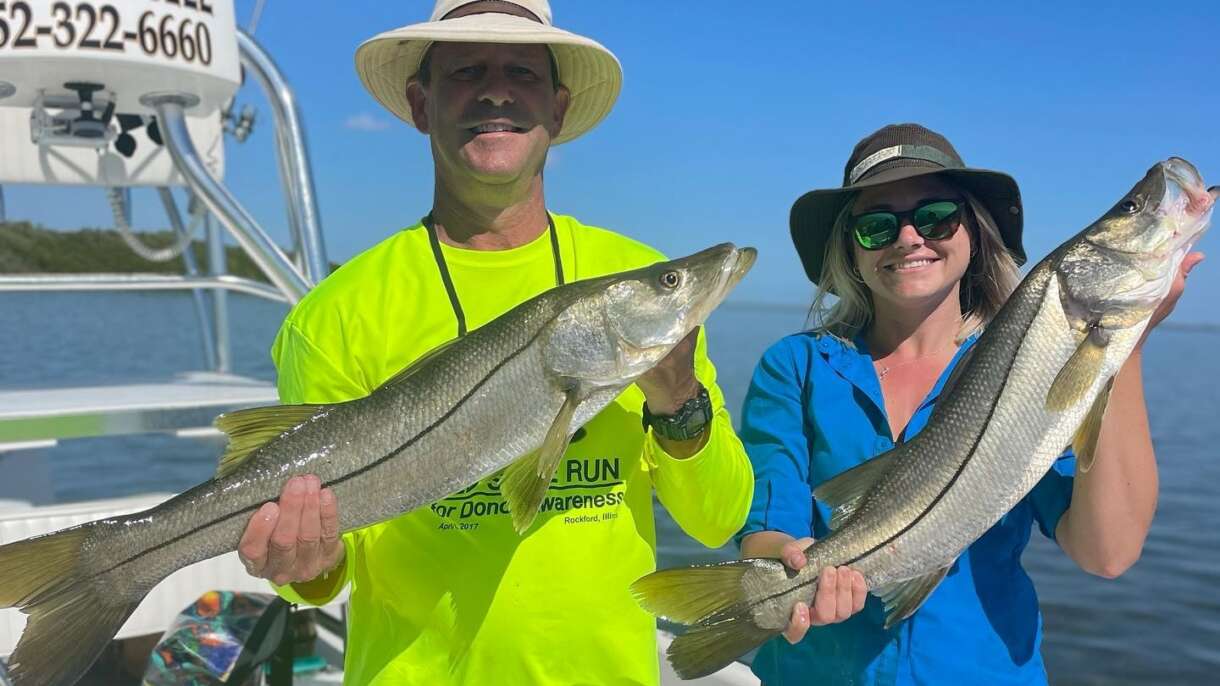
April in Crystal River is a spring inshore fishery built around grass flats, oyster edges, spring-influenced creeks, and nearshore limestone. Primary targets are redfish, spotted seatrout, snook, sheepshead, black drum, and the first serious tarpon windows late in the month. This guide solves three problems for anglers: where fish reposition between late cold fronts and stable warming trends, how tide height changes access and feeding lanes, and which tackle profiles fit clear, shallow water. It is built for anglers who already understand basic casting and boat position but want better catch efficiency. Expect strong mixed-bag catch rates on stable weather, moderate technical difficulty on clear low water, and advanced decision-making when wind and tide conflict.
April Conditions That Control Catch Rates
Water temperature trend, tide height, wind direction, and bait concentration control April more than calendar date. Redfish and trout are available across the full month, snook improve as afternoon temperatures stabilize, and tarpon only become operational when late-month warmth and forage align. Fishing well in April means reading the day first, then picking the right habitat instead of forcing one route.
The month splits into two phases. Early April still carries front-driven low water and shorter shallow feeding windows. Late April usually brings steadier warmth, stronger bait presence, and more consistent snook movement along mangroves, creek mouths, and travel lanes.
| Variable | Early April | Late April | Tactical Effect |
|---|---|---|---|
| Water temperature trend | Roughly 68 to 72 degrees after fronts | Often 73 to 77 degrees on stable weather | Controls snook reliability and opens the first serious tarpon scouting window |
| Tide height | More low-water exposure on bars, troughs, and creek mouths | More fishable flood-tide shoreline water | Decides whether to fish potholes and creek bends or mangrove and oyster edges |
| Wind direction | North and east wind can lower water and stain exposed shorelines | South and west wind often improve warming and bait movement | Determines route choice, drift angle, and how aggressively to fish open flats |
| Water clarity | Very clear over grass and sand | Still clear, with localized wind stain in open areas | Favors longer casts, softer presentations, and lighter leaders |
| Forage concentration | Shrimp and scattered small baitfish | Stronger pinfish and mullet presence | Raises snook activity and adds late-month tarpon interest |
Presentation changes with water clarity. Crystal River stays clear through spring, so landing noise, drift angle, and leader strength matter more than lure-color arguments. The correct adjustment is usually longer casts, lighter boat pressure, and repeated passes across potholes, troughs, oyster seams, and shoreline points with moving current.
- Primary habitats: 2 to 5 foot grass flats, sand potholes, creek mouths, oyster bars, limestone points, and spring-influenced shorelines.
- Primary forage: shrimp, pinfish, small mullet, glass minnows, and crustaceans around hard structure.
- Primary tackle window: 10 to 15 pound braid, 15 to 25 pound fluorocarbon, 1/8 to 1/4 ounce jigheads, light popping corks, and short-shank hooks for live shrimp.
- Primary trip split: early April favors mixed-bag inshore work, while late April allows stronger snook priority and tarpon scouting.
Operational order of importance: fish moving water first, protected water second, and exposed water only when clarity, bait, and wind all cooperate.
Tactical Patterns for April in Crystal River
April is not one pattern. It is four separate programs that rotate with tide height, wind exposure, and water temperature. Running the right one at the right time keeps search time low and lets you stay on productive water as the fishery shifts through the day.
Low-Light Grass-Flat Trout Drift
Trout are most efficient in April when you drift productive grass rather than anchoring on single spots. Early morning and overcast windows are best, especially when water is moving across sand potholes bordering 3 to 5 feet of grass. The highest percentage setup is controlled by grass-flat trout positioning, where bait, potholes, and current all overlap.
- Drift 3 to 5 foot grass edges next to 1 to 2 foot sand potholes on the first half of the incoming tide or the last half of the outgoing tide.
- Throw a 1/8 ounce jighead with a 3 to 4 inch paddletail, or suspend a live shrimp 18 to 24 inches below a light cork.
- Start this pattern when surface temperatures sit between 68 and 74 degrees and visibility is good enough to identify potholes cleanly.
- Keep the boat 40 to 60 feet outside the target water and fan-cast down-current before changing drift angle.
Flooded Mangrove and Oyster-Edge Redfish
Redfish improve as water rises and shorelines open. April reds use mangrove shade, dark-bottom banks, and oyster corners that give them quick access to depth when pressure or wind changes. The most repeatable route is built around backcountry redfish travel lanes that connect creek mouths, oyster points, and shallow feeding water.
- Target 1 to 3 feet of water on flood tide, especially where shallow shorelines fall into 3 to 5 foot creek bends or troughs.
- Use a 1/16 to 1/8 ounce weedless soft plastic, a gold spoon, or a live shrimp on a 2/0 circle hook with minimal weight.
- Prioritize dark-bottom shorelines after cool mornings and fish hardest once surface temperatures move above 70 degrees.
- Idle or pole parallel to the shoreline and make quartering casts ahead of wakes, pushes, or nervous bait instead of casting straight in.
Wind-Protected Sheepshead and Drum Structure
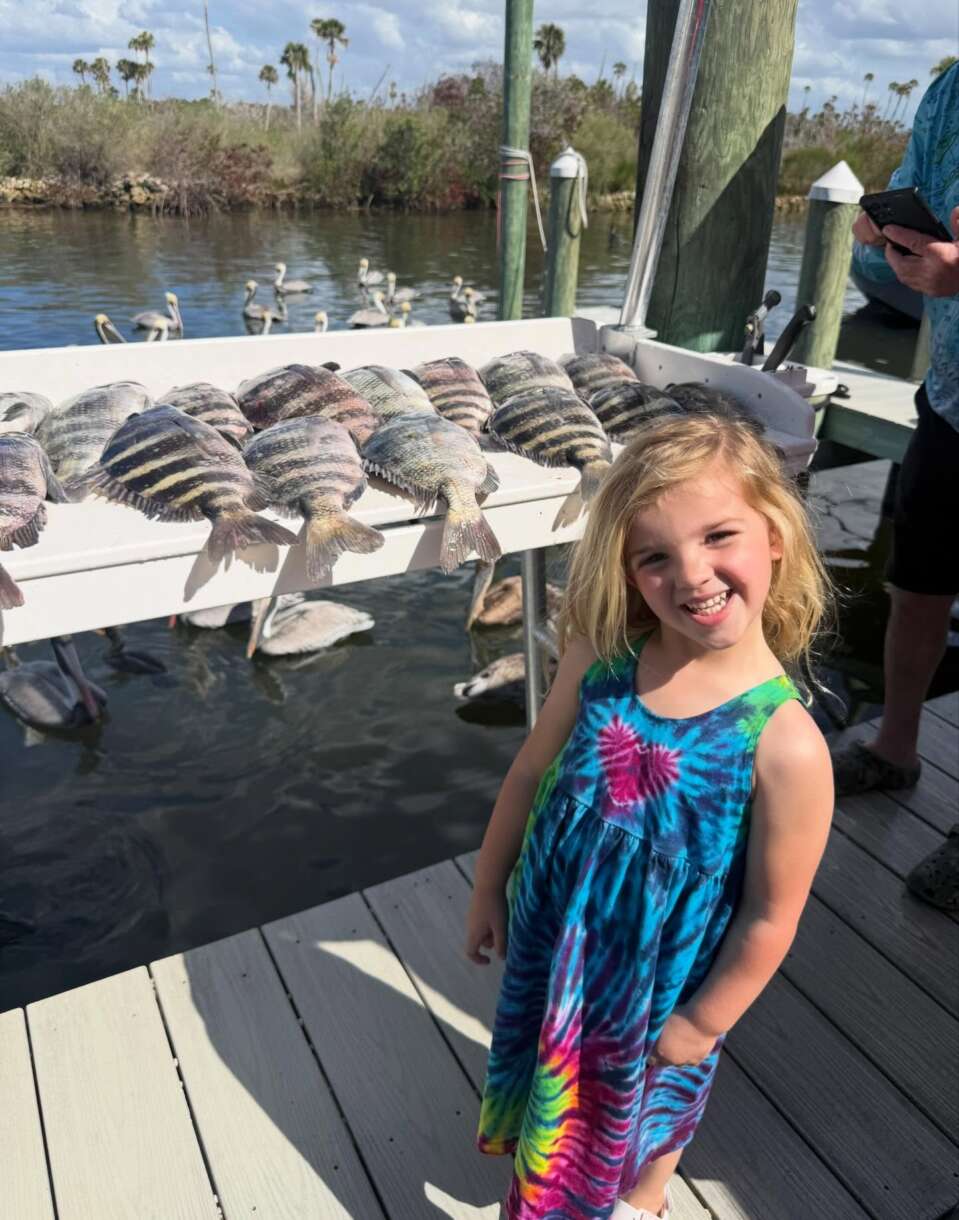
Structure remains the highest-percentage fallback when open flats are too clear, too low, or too windy. Sheepshead hold on limestone, docks, bridge supports, and rock, while black drum sit slightly deeper and slower on the same current lines. This pattern is strongest when you stay committed to the hard-structure sheepshead pattern instead of drifting open shoreline water.
- Work docks, bridges, limestone, and rock in 4 to 10 feet of water on steady moving tide.
- Rig 15 to 20 pound fluorocarbon with a #1 to 1/0 live-bait hook, a small split shot or 1/4 ounce knocker, and half a shrimp or a fiddler crab.
- Hold the bait within 12 inches of structure because most bites happen on the drop or immediately after contact.
- If black drum show deeper, add a small crab piece or shrimp on bottom and slow the presentation until the rod loads.
Late-April Snook and First Tarpon Windows
Late April is when snook stop acting like a winter leftover and start acting like a spring target. Tarpon are not a full-month primary fish, but the first serious shots show when water stabilizes, bait thickens, and clean travel lanes appear. Trip timing improves sharply once you track early spring tarpon timing against warming water and stable weather.
- Fish snook in 2 to 6 feet of water along mangrove points, creek mouths, dock lines, and current seams during dawn, dusk, or strong tide movement.
- Scout tarpon in 5 to 8 foot travel lanes, spring-influenced passes, and nearshore bait routes once water holds around 74 to 78 degrees.
- Use live shrimp or small baitfish for snook on 20 to 30 pound fluorocarbon, and keep tarpon gear separate with 30 to 40 pound braid and 60 to 80 pound leader.
- Do not force tarpon as the only plan early in the month; treat them as an added window after reds, trout, or snook are already producing.
April Questions Serious Anglers Ask
These are the questions that matter before committing a day to April water. Each answer below is written for trip planning, species selection, and realistic expectations in Crystal River during the spring changeover.
Is April better for redfish and trout or for snook and tarpon?
April is strongest for redfish and spotted seatrout across the month. Snook improve steadily once afternoon water temperatures stabilize. Tarpon are a late-month addition, not a full-month primary target. Anglers seeking numbers should prioritize trout and reds; anglers seeking heavier fish should fish late April and accept lower bite counts.
What tide is best for April fishing in Crystal River?
The best April tide depends on target species, not a single rule. Trout usually feed best on moving water across grass flats. Redfish favor rising water that opens mangroves or falling water that drains bait. Sheepshead and drum require current on structure. Late tarpon scouting improves on stable, clean tides.
Should April anglers fish artificials or live bait?
Both work, but the higher-percentage choice changes by habitat. Artificial lures cover trout and shallow redfish efficiently when visibility is good. Live shrimp stays strongest for inshore trips and structure fishing. Late April snook and tarpon often justify live baits because those fish feed on bigger forage by late month.
How much does wind change an April trip in Crystal River?
Wind changes route planning more than it changes fish presence. Strong east or north wind can empty flats, dirty shorelines, and make drifts inefficient. Protected creeks, limestone banks, and structure become the better program. Serious April anglers pick the cleanest water with moving current instead of forcing an exposed flat.
Planning an April Charter with Crystal River Guide Service
April trips at Crystal River Guide Service are best built around two clear programs: a mixed-bag inshore day for redfish, trout, snook, sheepshead, and drum, or a late-month schedule that leaves room for tarpon scouting when warming water and bait concentration justify heavier gear.
The planning sequence is straightforward. Use the Fishing Reports page to confirm the current phase of the month, compare the Inshore Fishing and Tarpon Fishing offerings, then line up target species with tide height, wind forecast, and angler skill level through the Rates & Reservations and Contact pages. The FAQ and Areas We Fish pages help narrow launch strategy, travel time, and whether April conditions favor shallow flats, backcountry creeks, or structure water.
April rewards flexibility. Early month is strongest for redfish, trout, sheepshead, and drum. Late month adds more reliable snook and the first serious tarpon decisions. Match the trip to the water conditions first, then to the species list, and April becomes one of the most efficient months of the year to fish Crystal River.